
By, Avery G. ’21
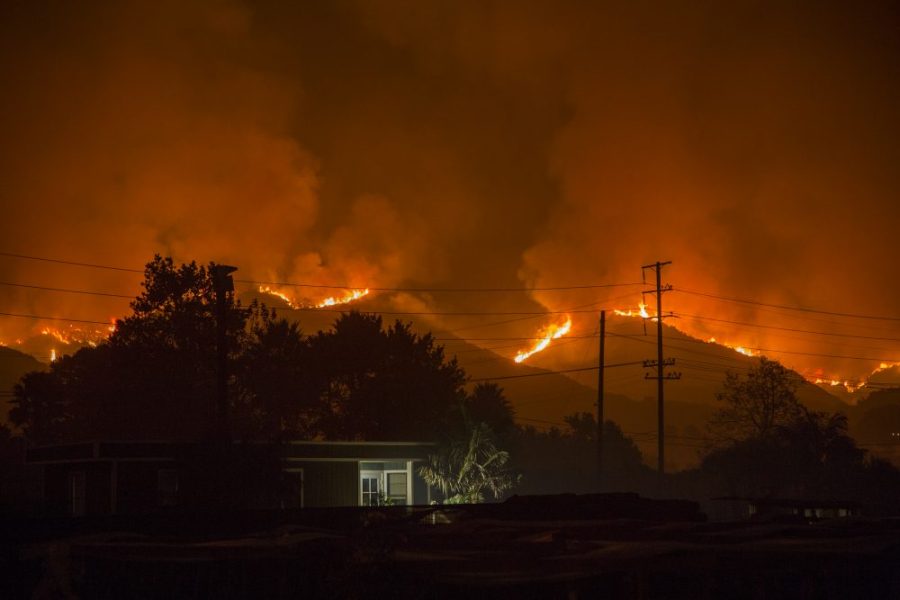
As of Sunday, November 25, California has contained the deadliest wildfire it has ever seen. The fire devastated much of Northern California; it ravaged nearly 150,000 acres, killed at least 85 people, and wrecked 14,000 homes (Washington Post, New York Times). How did it start?
The fire, nicknamed Campfire, started on November 8 in the foothills of the Sierra Nevadas (New York Times). As of now, there is no single factor to point to as to who is responsible. However, Pacific Gas and Electric, a utility company, could be one of the causes. This utility company has been responsible for several wildfires in the past due to faulty equipment, which could have fallen or malfunctioned and started a spark. One statistic found that “of the 21 major fires last fall in Northern California, 17 were caused by power lines, poles, and other equipment owned by Pacific Gas and Electric” (New York Times). Another major factor is the environment, as California is very dry, especially after experiencing years of drought (CNN). In addition, the strong winds allow the fire to be carried quickly. More than half of California is in a moderate drought, and most of the state has received less than 5% of its normal amount of rainfall (CNN). Others attribute the increasing deadliness of fires to logging. In 2008, there was encouragement of logging in forests in order to make wildfires less dangerous. However, the opposite happened. By eliminating trees, the remaining plant life was highly flammable shrubs and plants (New York Times).
With a better understanding of the cause, it is now important to discuss the ways in which wildfires can be prevented. According to National Geographic, most wildfires are started by humans. Often, fires are the result of unattended recreational fires. In the wilderness, be sure to take the following steps. First, be sure you are starting a fire in a designated fire pit, which is surrounded by stones and cleared of plant life. Also, do not start a fire on a very windy day as the flames could be lifted away (Red Cross). Remember to completely extinguish your fire before sleeping or leaving a campsite. You can do this by pouring water on the fire and stirring the ashes until they are cold. Another way to prevent fires is to clean up cigarettes, matches, or flammable materials around the woods. Be sure to dispose of cigarettes and used matches in a responsible way by placing them in a closed container (National Geographic).
Along with some of the causes of these wildfires, climate change could also possibly affect these fires. Concerned climate scientists have recently spoken about how the changing climate caused by global warming will only make things worse. In August, a California report found that the average area burned by wildfires will increase by 77% by 2100 if greenhouse gas emissions continue (CNN). Wildfires today are, on average, more frequent and longer-lasting than wildfires in the 1980s. One statistic states that from 1986 to 2003, wildfires “occurred nearly four times as often, burned more than six times the land area, and lasted almost five times as long when compared to the period between 1970 and 1986” (UCUSA). It seems fires are only going to increase and worsen until we find a way to deal with climate change (NPR).
 Winsor Banner