
By: Annabelle Holt
Most people born between 1996 and 2011, or Gen Z, are familiar with traits of our generation. Our slang consists of the recognizable phrases “slay,” “girl…”, and “be so for real.” Our values have molded to acknowledge current nuances of race, gender, and sexuality. Why, then, do we collectively recoil at seeing these same traits appear in the media?
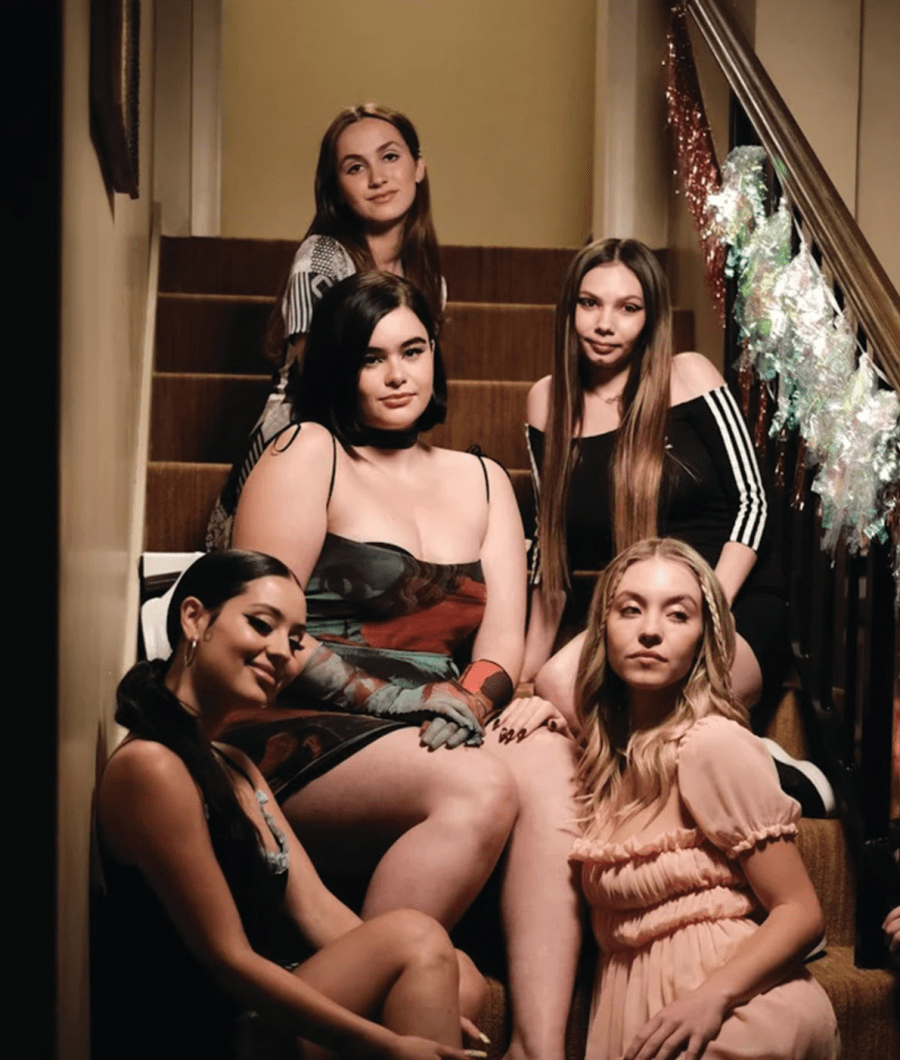
Sienna McCabe ’27 expressed that her favorite TV shows centering on Gen Z characters were HBO’s Euphoria and Netflix’s Heartbreak High reboot. “I’m not saying Euphoria is the best show ever,” she said, “but I feel like it’s the best show I’ve ever watched depicting Gen Z mental health issues.” On the Heartbreak High reboot, she focused on its humor: “The lingo is very accurate, without being too much.”
While these shows might hit the mark in representing Gen Z’s mental health concerns and slang, I believe that many shows lack such accuracy. Often, one-off lines are used to enforce a character’s youth, but these usually contain an overload of slang that falls entirely flat. In the delivery of these lines, actors, especially those who aren’t Gen Z, tend to leave out the ironic flair that we often use in our everyday lives, making the line feel empty and forced.
Another issue in the depiction of Gen Z is the adultification of high schoolers. “Shows like Euphoria, Ginny and Georgia … [misrepresent] what high schoolers are like,” says Luisa Griffith-Gorgati ’26. “Sex and drugs are often prevalent in high school, but not to the degree shown in media.” Also, Griffith-Gorgati adds, when companies “[cast] people in their twenties in the place of young high school students, it paints an unrealistic picture of physical maturity.”
When we observe media that supposedly represents us and feel a significant disconnect between ourselves and the characters, a fear of missing out occurs. We compare our lives, bodies, and actions to these twenty-something actors playing teenagers who party every week while having no schoolwork. While our common sense might tell us that this judgment is an unreasonable comparison, we can slip into a spiral that asks us how well are we living “the teenage life.” To bridge some of this gap, I believe more Gen Z actors and writers should be invited to contribute to the development of a realistic image of a Gen Z teenager.
While certain media accurately depicts their Gen Z characters, there is often a large gap between the experiences of characters written by Millennials and Gen X-ers versus us, real-life Gen Z-ers. As hard as these writers from generations before us can try to provide us with a faithful representation of Gen Z, there will always be an element of our culture missing that only the insight of an actual Gen Z-er can restore.
 Winsor Banner