
By: Anaya Raikar
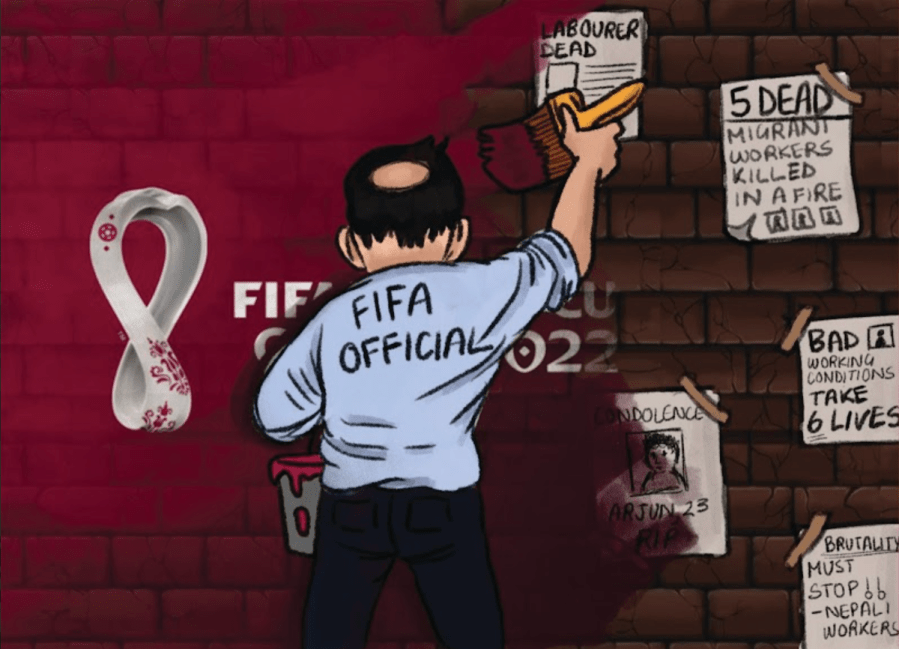
“Mbappe offered record-breaking deal to Saudi for 1 billion Euros” read sports headlines across the world this summer. Transfer windows are a crucial part of club soccer, where players are exchanged across clubs and leagues for million dollar sums. The summer transfer window in particular is highly awaited due to anticipation of upcoming national and continental league championships. This summer, the Saudi Pro League has gained international prominence due to their signing of top players through lucrative contracts, such as Cristiano Ronaldo, Karim Benzema, N’golo Kante, Jordan Henderson, and Neymar Junior. Each of these players were acquired with staggering fees, as the Saudi Pro League spent most of its 950 million expenses this summer on transfers. The emerging presence of the Saudi Pro League prompts important questions about the role of large spending in soccer, as well as the role of sports in promoting a country’s image, known as sportwashing. The world of club soccer risks losing talented players to less competitive leagues like the Saudi Pro League due to the appeal of money, in addition to morals given the SPL’s desire to gain fame through sports and cover up human rights controversies.
The Saudi Pro League, and the Saudi government by extension, is engaging in unethical sportswashing due to their recruiting of top players. A prime example is Jordan Henderson, who transferred to Saudi Club Al-Ettifaq in the summer of 2023 after years of captaining English Premier League club Liverpool FC. At Liverpool, Henderson stated that “everyone is welcome at Liverpool Football Club” and that if by wearing rainbow laces he helped at least one person, that was progress; his statements and activism struck a chord with fans and LGBTQ+ organizations. Henderson’s transfer to Al-Ettifaq drew criticism due to Saudi Arabia’s severe repression of the LGBTQ+ community. By signing Al-Ettifaq’s contract, he would be complicit in these human rights violations. In an interview with The Atlantic, Henderson said, “I can understand the frustration [from the LGBTQ+ community]… All I can say around that is that I’m sorry that they feel like that. My intention was never, ever to hurt anyone.” Given his indifferent response and willingness to transfer, it is clear that Henderson has essentially sold out to Saudi interests.
The Saudi Pro League has gained a reputation for being a retirement league, where successful players spend their last playing years gaining a comfortable paycheck. However, top players who are still suited to the competitive arena of European soccer have begun to receive contracts. 31-year-old Neymar Junior, who signed a two year contract with Saudi club Al-Hilal in August despite having a couple years left in European league soccer, comes to mind. According to Science Teacher Mr. Brooks-Hedstrom, “a lot of the players going to Saudi are being paid to disappear, and that’s really sad.” Additionally, Gracie Zhou ’26 said “I think Ronaldo spearheading the Saudi exodus really showed other players that it was okay to sign away their careers and maybe morals for money.” The SPL has indeed experienced spikes in viewership after fans tune in to view their soccer idols or purchase tickets, contributing to Saudi tourism. In order to combat sportswashing, some leagues, such as US Major League Soccer, have begun to introduce the concept of wage caps. These are limits on the amount of money clubs can spend on new players. This new policy is uncertain, as some clubs have spent the majority of their funds on flashy forwards, leaving their defensive lines weak. However, if developed effectively across various competitive leagues, wage caps could potentially level the playing field for smaller clubs and contribute less to the effect of sportwashing.
 Winsor Banner