
By: Katina Handrinos
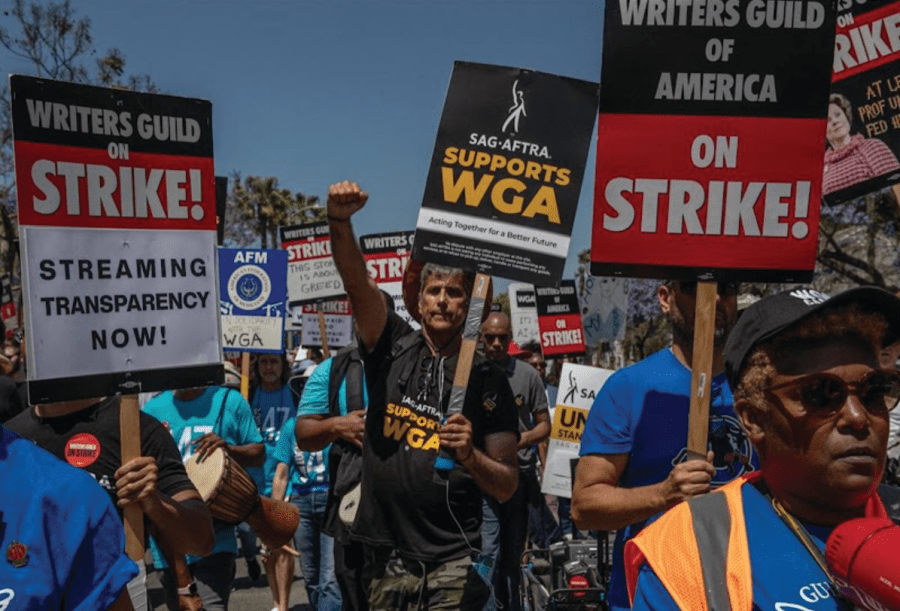
On September 10, Drew Barrymore announced the release of the fourth season of her talk show, The Drew Barrymore Show, while the Writers Guild of America (WGA) strike was still ongoing. Backlash was immediate as fans called her out for crossing the picket line, and her invitation to be the host of the National Book Awards was quickly rescinded. Cristina Kinon, one of the writers for the show, commented, “It is frustrating because it will prolong the strike, and we just want it to end.” This instance of crossing the picket line made me wonder, how important is it for celebrities and the general public to stand with unions?
For some context, the WGA was on strike this year from May 2 until September 28 after an overwhelming majority of 97.85% of WGA members voted in favor. Notably, there’s been a 4% decline in TV writer-producer pay over the past decade and 14% decline in the median movie screenwriter pay since 2018; therefore, writers are rarely able to support themselves on writing jobs alone. Additionally, the writers wanted regulations on use of AI by the Alliance of Motion Picture and Television Producers (AMPTP) as the rise of that technology endangers traditional writing jobs. Soon after, the Screen Actors Guild-American Federation of Television and Radio Artists (SAG-AFTRA) joined the WGA on July 14, 2023 after their contract with AMPTP expired. With the ever-popular model of fewer episodes per season, actors are working less frequently and unable to have a steady income. SAG-AFTRA is also concerned about the progression of AI and what that might mean for their livelihoods.
Sawyer Bowen-Flynn ’25 spoke to her father who is a member of the editorial board for SAG magazine and representative on SAG committees about his perspective on the strike. My questions for him were what his initial reaction to the strikes was and as someone involved in performing arts, how the mistreatment of writers and actors affects him. He responded, “The actors had to do what was necessary to protect their rights to their own identities. It makes it much harder for people to make a living through art when producers consider art to be content that can be created equally by AI.” Even if you don’t see yourself as a “movie” or “theater” person, every culture would be drastically different without the artists who represent and reflect on the society around them and so, more empathy should be extended. Matilda Fletcher ’25 commented, “The power of a strike comes from the unity of a blanket refusal to provide a service until that group’s needs are met…crossing a picket line really weakens that unity.” Celebrity support is even more crucial because of the buzz big-name personalities can hold; furthermore, the more positive attention a union can get, the stronger they can be. So the next time you see news about a union, Hollywood-related or otherwise, maybe think about the strength in numbers one can have when protecting the little guy from power-hungry executives drooling over dollar signs.
 Winsor Banner