

By Lara do Rosario, Banner Staff
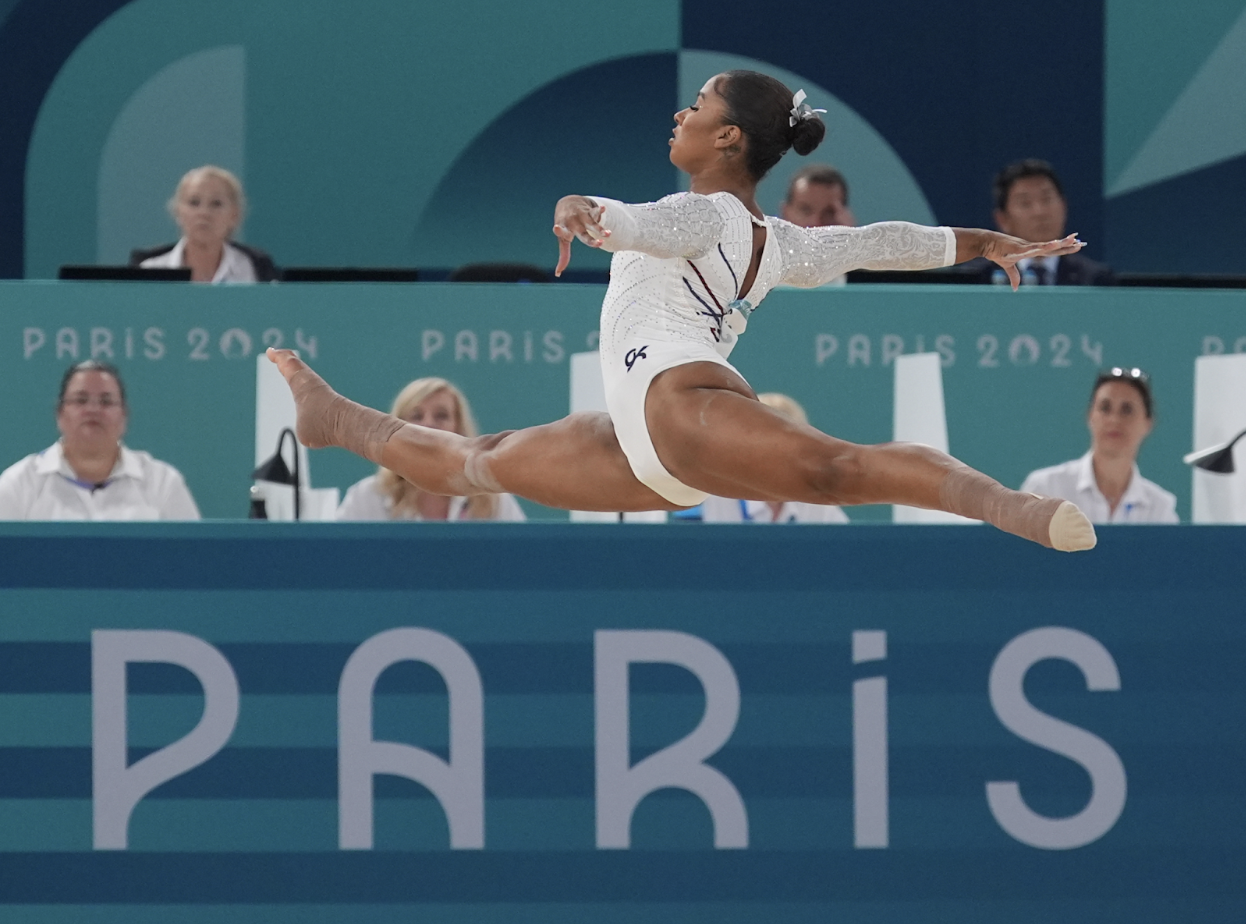
You don’t have to be a gymnast or even understand how gymnastics is scored to enjoy watching the sport in the Olympic Games. Every four years, gymnastics is a must-watch at the Games because of how exciting it is to see true feats of nature combined with elegant artistry. However, behind the rhinestones and the five rings, the journey to the Olympics is full of sacrifices. For two athletes at these past Olympics, years of sacrifices made to train at the highest level went unrewarded because of a technicality. United States athlete Jordan Chiles had the opportunity to win her first-ever individual Olympic medal in this event. She was part of the medal-winning teams of the 2020 and 2024 US teams, but her goal for these games was to secure her place as a podium finisher in the individual event competition.
She was the last competitor among nine athletes competing in the women’s floor event final. Needing a score greater than 13.700 to edge out Romania’s Ana Barbosu, she completed a powerful and confident routine that was inspired by Beyoncé. When her score came out, it fell short of that number (13.666), but her coaches submitted an inquiry to the judges to contest that she didn’t receive full difficulty credit for a skill. The inquiry was reviewed and the panel of nine judges determined that their initial ruling, which gave the skill a C-level difficulty, actually was a D-level difficulty. This decision alone was enough to add a tenth of a point to her score and put her in the third-place spot. At the end of the event, Chiles was the third-place finisher, but days later the decision to boost Chiles’ score was challenged by the Romanian gymnastics team. Romania argued that the US inquiry had been submitted outside the one-minute window for inquiries, and the Court of Arbitration for Sport (CAS) agreed, stripping Chiles of her medal and returning her score to 13.666. The most recent development came when Chiles appealed her case to the Federal Supreme Court of Switzerland, where CAS is based.
Through all the back and forth, the true spirit of the Games has been lost. In her remarks at the first assembly of the school year, Ms. Pelmas spoke about the spirit of camaraderie and support among female athletes during these Olympics. “Sport after sport, competition after competition, the women who didn’t win the gold (or perhaps didn’t win any medal at all, who perhaps didn’t even make it out of the heats)… went out of their way to help each other, to celebrate the winners, and to show what athletics is all about,” she pointed out. Bearing this in mind, the best course of action going forward with the bronze medal controversy is to award two bronze medals to both athletes. The reality is that gymnastics is a sport that takes an insane amount of time, dedication, and hard work, and neither gymnast should feel that that work is going unrewarded because of a technicality.
 Winsor Banner