

By Julia Bae, Banner Staff
On Tuesday, November 5, Remy Kim ’25, like many other Americans, “found it very difficult to stay away from the news.” After all, the 2024 Election Day included key national elections within the Senate, House of Representatives, and, of course, the presidency.
Most notably, Donald J. Trump, former U.S. President and the Republican nominee, won the presidency and will become the 47th President of the United States. He secured 312 votes in the Electoral College and defeated Kamala Harris, current U.S. Vice President and the Democratic nominee, who obtained 225 Electoral College votes. Trump will be returning to a position he held from 2017 to 2021, during which his two impeachment trials led to controversy and strong partisan divide.
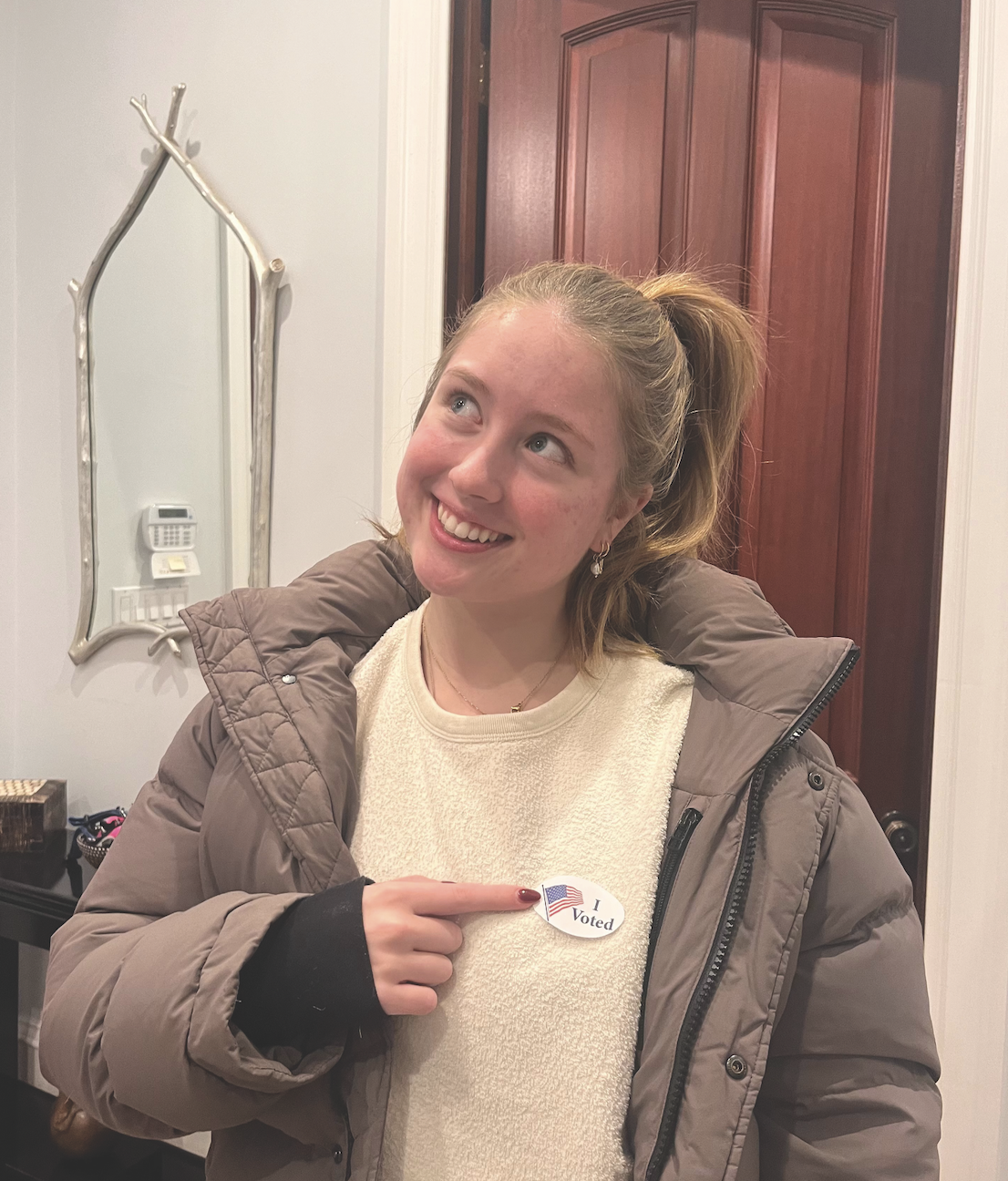
Lizzie Voting, above
The outcome of the election largely revolved around seven swing states; Pennsylvania, Michigan, Wisconsin, Georgia, North Carolina, Arizona, and Nevada were expected to have very close margins between the Republican and Democratic parties. This year, however, Trump won all seven of these swing states, as reported by The Associated Press (AP).
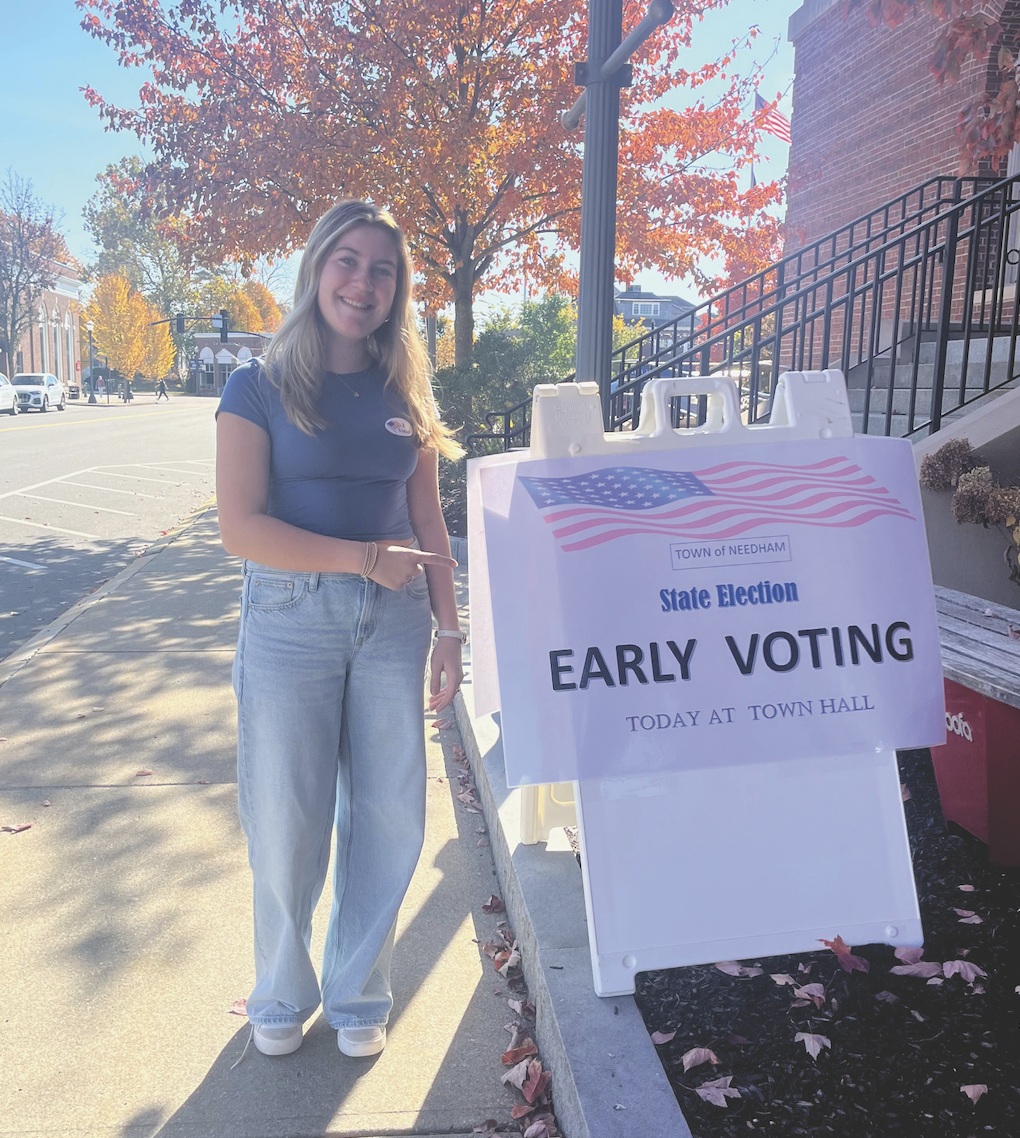
Julia Voting, above
Alongside the presidency, 34 Senate seats and all 435 House of Representatives seats were up for election. Within the Senate, where Democrats previously held a 51-49 majority, Republicans flipped seats in West Virginia, Montana, Pennsylvania, and Ohio and won close races in Nebraska, Florida, and Texas. The Republican Party will now have at least a 53-47 majority, as reported by the AP. In the other body of Congress, the Republican Party maintained its control of the House of Representatives. Prior to the elections, Republicans held a 220-213 majority over the Democrats, with two vacant seats, and they secured 220 House positions again this term, assuring them a continued majority. The Democrats won 215 seats, with Adam Gray (D) winning the final race in California. These federal results mean that the Republican Party will now hold a majority in both the executive and legislative branches—a fact that worries many centrist and left-leaning citizens regarding the potential legislation a Republican Congress could enact.
As these national events unfolded outside of school, Winsor students took time during advisory and History classes to discuss the election results. Ms. Holland, head of the History Department, said that the “History Department agreed that we would take on the role of talking with our classes…helping facilitate conversations after the election.” During these conversations, many students grappled with the implications of the election. In particular, Trump’s pledges to implement mass deportation, history of restricting abortion access, and plans to reverse climate legislation concerned many students.
As we move towards the start of new presidential, Senate, and House terms in late January, the political landscape can feel uncertain, divisive, and even frightening for some. However, it’s important that everyone—regardless of political beliefs or feelings about the latest election results—stay updated on national and local policies in order to have the necessary information to advocate for ourselves and our values, and ultimately, vote. Only then can we hope that our collective voices make a true impact in creating the world we wish to see. ☐
 Winsor Banner