
By Bonnie Shao, Banner Staff
On November 1, 2024, students, family, and friends of the Winsor community filled the first floor and spilled onto the balcony of the Goel Theater as they waited for the lights to dim on the world of Winsor’s first-ever Lower School fall play. This play was Mill Girls by Eliza Anderson, set in the 1840s at a textile mill in Lowell, Massachusetts.
Mill Girls tells the story of a group of young women from diverse backgrounds who, for a variety of reasons, must work at the Lowell Mills. The workers are united by the inhumane, inflexible conditions in which they are forced to labor, and they stage multiple strikes against the mill as a result. The play conveys the hopeful message that although one’s first attempts at fighting injustice may be futile, only ceaseless perseverance can create change.
Although the production was dominated by vibrant theatrical performances, students’ involvement went far beyond acting onstage. For instance, I was impressed with the professionalism with which the actors handled the play’s many set changes, which are often difficult to execute without jarring the audience from the play’s world. The production used a simple but versatile set that featured two large platforms, a ladder, and several benches. The inventive, varied placement of these set pieces framed an assortment of settings throughout the play, from a factory bedroom to a gathering place for a rally. As Maddie Karczmarek ’30, a returning participant of Winsor Theater, noted, “This was probably the show with the most set pieces that I’ve had to move so far.”
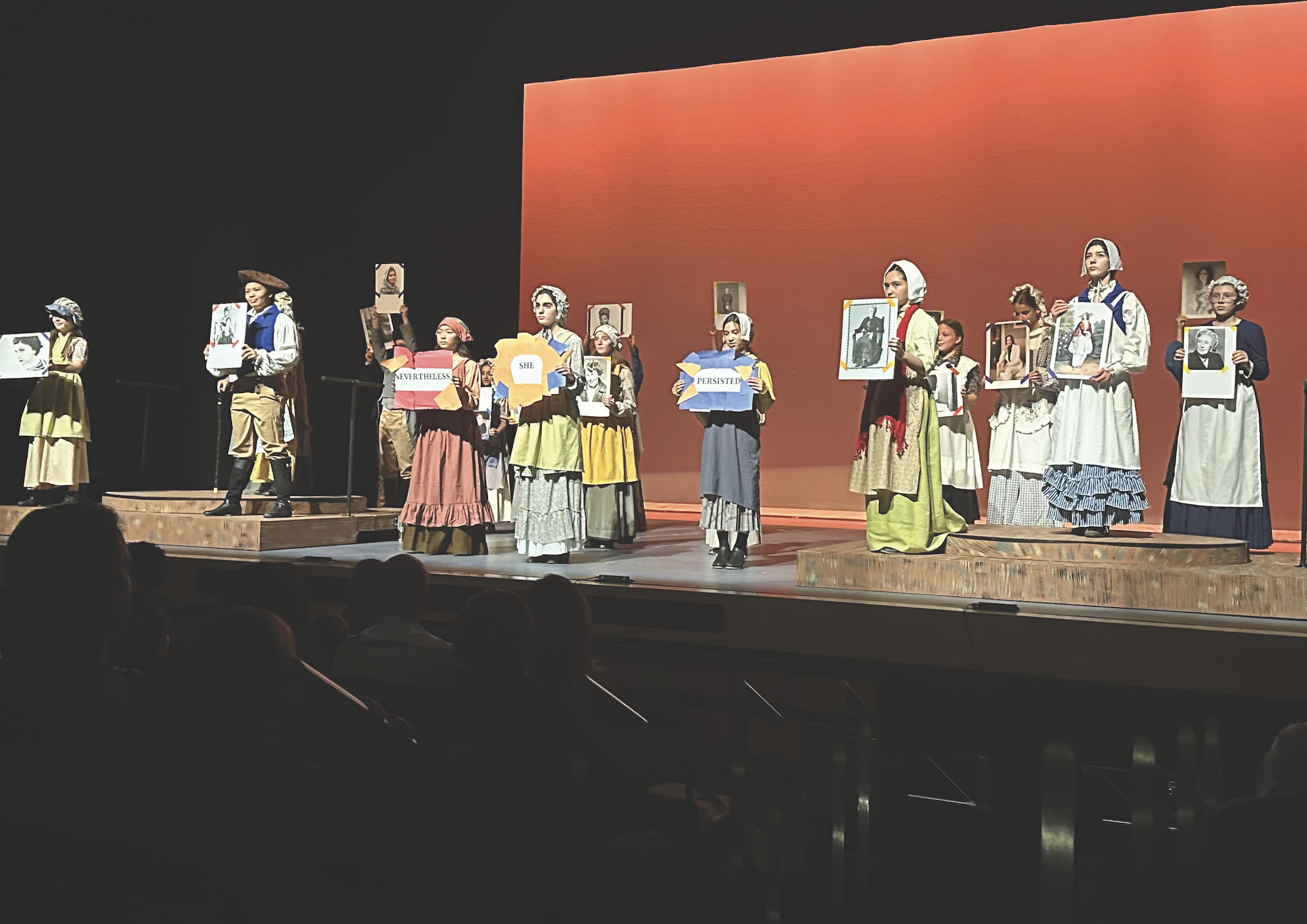
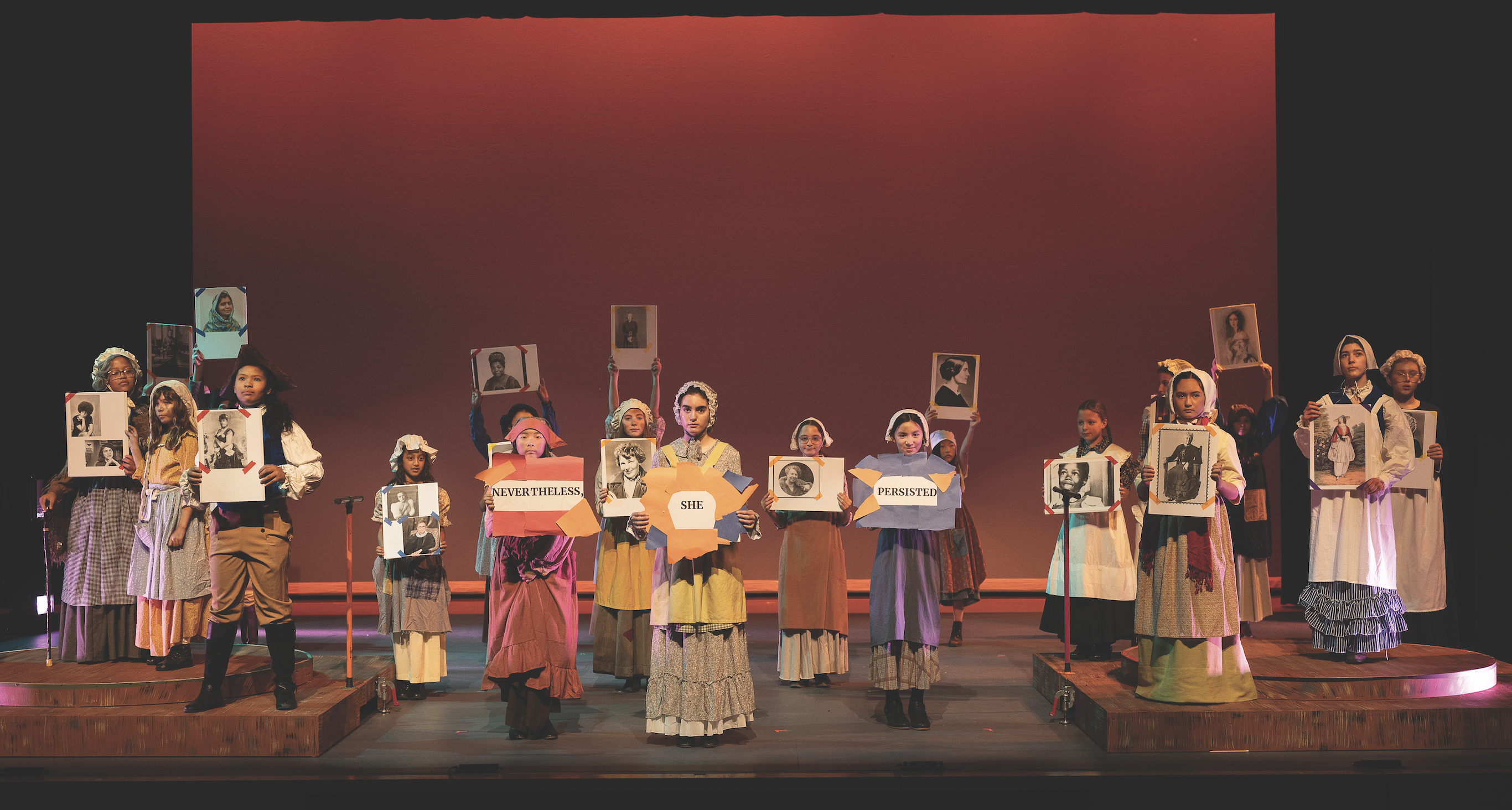
Students also helped devise different aspects of the show. At various points in the performance, the actors depicted the experience of working on the factory floor through stylized choreography, using materials like buckets and cloth to represent parts of a machine. Maysa Atassi ’29 shared that the cast was able “to put in [their own] choreography for different parts of the machine.” At the end of the show, actors connected the events of the play to the accomplishments of women role models throughout history, raising images of famous women with the words “Nevertheless, She Persisted.” Leomana Addo-Fung ’30 revealed that she had suggested the idea for this impactful moment.
No matter the production or one’s role in it, theater serves as a powerful tool to build community across grades. Performing Arts Department Head Ms. Brady-Lopez noted that participating in theater productions helps students “form bonds and friendships in a very special way because they’re working on a common goal.” Likewise, Addo-Fung commented, “Theater has become a very easy and open space for me to express myself. Being able to share that with both people who I’ve known for a while and new people is both humbling and incredibly heartwarming.” Although Mill Girls highlighted an inventive set, powerful performances, and imaginative choreography, what truly made the production a resounding success were the strong and enduring bonds that it fostered between its participants.☐
 Winsor Banner