
By Iris Shen & Sophie Kim, Banner Staff
The H1B visa has quickly become a point of controversy within the Trump supporter, or Make America Great Again (MAGA) movement. According to the U.S. Department of Labor, an H1B visa is a temporary visa classification that allows employers to sponsor highly skilled foreign professionals for employment in specialized fields that require a minimum of a bachelor’s degree or its equivalent. Many jobs in computer science apply to this category of visa. After Donald Trump’s advisors and tech oligarchs like Elon Musk supported having more immigration under this visa category, a scorching debate erupted that divided the MAGA faction. The conflict started after Indian-American venture capitalist Sriram Krishnan joined Trump’s team as an artificial intelligence advisor. Several people on the far right attacked him with xenophobic and racist comments and criticized him for supporting green cards for educated workers.
The debate diffused to the greater American population when Vivek Ramaswamy, an American entrepreneur and Republican politician, posted a controversial argument on X, formerly Twitter, making inflammatory remarks such as “our American culture has venerated mediocrity over excellence for way too long,” and “‘Normalcy’ doesn’t cut it in a hyper-competitive global market for technical talent,” attacking American work and academic culture. This post received great attention, sparking conversations about how the United States workforce, particularly that in the computer science industry, could adapt to and overcome the growing pressure of competition with China. Many far-right supporters agreed with Ramaswamy’s sentiment, adding that the American tech industry needed skilled workers quickly, and H1B visas are able to relieve that stress. Other far-right supporters expressed concerns about the H1B visas. Indians make up a bulk of H1B petitioners, and the right-wing supporters argued for the protection of jobs for American citizens, likening H1B visa holders to “invaders.”
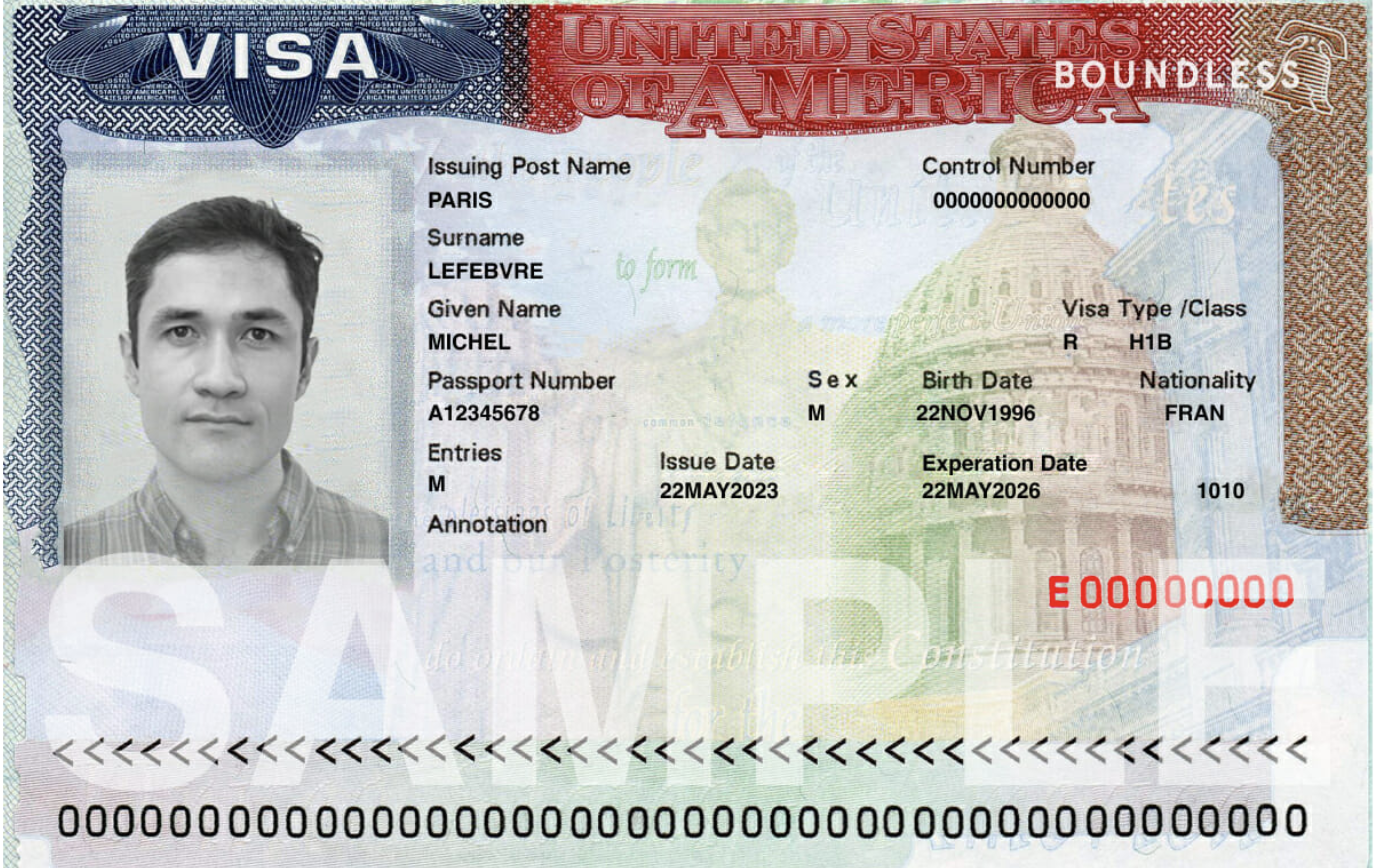
H1B Visa Copy, Google Images
However, some others argue that the program allows companies to prioritize cheaper labor over hiring American workers. Amelia Kwak ’25 criticized the program, saying that “the real reason that tech oligarchs like Elon Musk support the H1B visa program is not because there are no skilled workers in the US but because H1B workers provide exploitable and cheap labor.” Kwak also noted that because of the temporary nature of H1B visas, “employers can leverage immigration status in order to exploit workers.” Additionally, Demira Parekh ‘26, an Indian-American, noted that “while H1B visas are often discussed in ways that emphasize innovation and talent, these visas also risk perpetuating a cycle where companies solely prioritize minimizing costs.”
Overall, the discourse surrounding H1B visas reveals the deeper-embedded tensions over immigration and labor. As Winsor students strive to understand the political issues currently pertinent to the United States like immigration, it is critical that all the economic and ethical implications of H1B visas are taken into consideration throughout these conversations. ☐
 Winsor Banner