
By Charlotte Wheeler, Staff Writer |
On April 27, Mayor Michelle Wu announced the Boston 2030 Climate Action Plan. As the city’s first fully integrated climate action strategy, the plan addresses ways the city can mitigate climate change, augment climate resilience, and improve climate justice all at once.
Currently, the city has reduced its greenhouse gas emissions by 22.4% compared to 2005 levels. Before the new plan was announced, the city was already on track to reach a 48% reduction by 2030. Central to the plan is the goal to increase that reduction to 50% by 2030 using a variety of strategies.
One such strategy involves transportation, the second largest source of greenhouse gas emissions in Boston following the building sector. Personal vehicles make up 90% of these emissions; by contrast, MBTA operations only account for 5% of these emissions. By 2030, the city aims to ensure that all residents are within a five minute walk from an electric vehicle charging station, a bikeshare station, and a form of public transit as a way to increase the accessibility of sustainable transportation. The city also hopes to promote public transit by creating lanes where buses can bypass traffic and making bus routes 23, 28, and 29 permanently fare-free.
The warming climate is already affecting Boston, especially compared to less urban areas. Consequently, as Ms. Beebe, the faculty advisor for the Lower School Planet Protectors club, said, “the plan talks about strengthening tree policies so that Boston is expanding the tree canopy, improving street tree growing conditions, and preserving the existing tree canopy.” She added, “Trees are…one of our best methods to tackle climate change. They mitigate problems like pollution, heat, and water runoff.” In the last five years, the strides that the city made in tree-planting were entirely offset by the removal of trees on private land. Thus, the plan will promote the planting of trees on private property while bolstering tree-planting initiatives in public spaces. It will also increase the use of permeable pavement, which allows water to reach the roots of trees and absorbs less heat than non-permeable pavement.
The city also hopes to simplify the permit process for installing solar panels and increase the number of residents enrolled in the Boston Community Choice Electricity program, which currently serves 200,000 residents. The program provides residents with electricity from renewable sources at a rate competitive with those of third-party companies that provide electricity from non-renewable sources.
Overall, the 2030 Climate Action Plan highlights Boston’s determination to increase its climate change prevention and resilience in a way that benefits Bostonians of all backgrounds and income levels. Elena Bird ’27, head of the Conserve Our World club, added “I think the fact that Boston has this plan…indicates their interest in engaging the public in climate action, which is really important.” The Banner encourages you to read the full, publicly-available plan online if you would like to learn more about its potential impacts on your community or ways you can support Boston’s mission.
Here’s a link to the Boston 2030 Climate Action Plan!
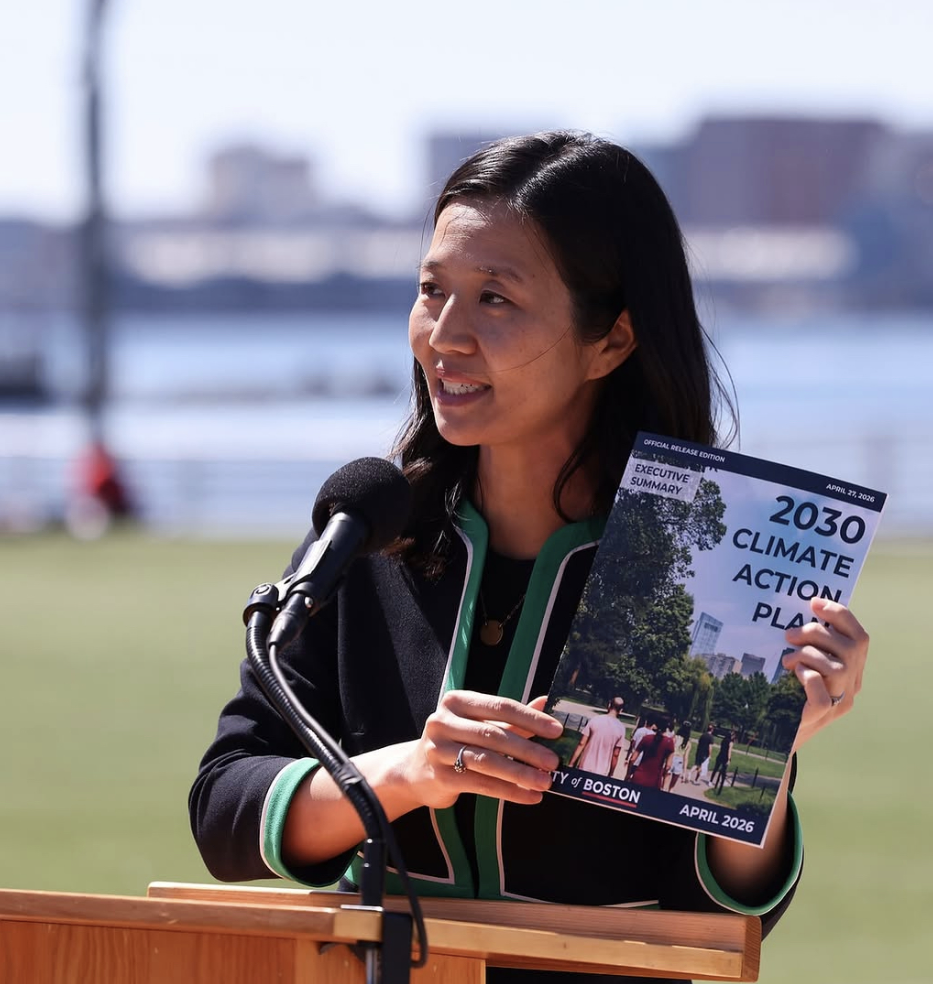
Mayor Michelle Wu announces the Boston 2030 Climate Action Plan | @cityofboston

